Most of us spend the bulk of our day indoors, where pollutants from cooking, cleaning products, furnishings, moisture, and outdoor air can quietly build up over time. Unlike outdoor pollution, which tends to disperse across open space, indoor contaminants often get trapped in enclosed rooms with limited airflow. This article walks through how to recognize common indoor pollutants and prioritize the interventions most likely to make a real difference.
Understanding Common Indoor Air Pollutants
Particles and Allergens
Cooking, candles, fireplaces, tobacco smoke, and outdoor pollution all add particulate matter to the air inside your home. Dust, pollen, and pet dander can also get stirred up through everyday activity—walking across a carpet or shaking out bedding, for instance. How much these particles affect health depends on their concentration, the length of exposure, and a person’s individual sensitivity.
Gases and Chemical Pollutants
Volatile organic compounds—often released from paints, adhesives, new furniture, and certain cleaning products—represent another category worth watching. Combustion byproducts like carbon monoxide and nitrogen dioxide typically come from fuel-burning appliances that are poorly maintained or inadequately vented. It’s worth remembering that odor is not a reliable indicator of safety; some of the most dangerous indoor pollutants, including carbon monoxide, have no smell at all.
Biological Contaminants
This category covers mold, bacteria, viruses, dust mites, and pest-related allergens. Persistent moisture is usually what drives mold and bacterial growth in the first place. Visible mold or ongoing water damage often calls for a professional assessment rather than a quick surface cleaning, since the real problem may run deeper than what you can see.
Start With Source Control
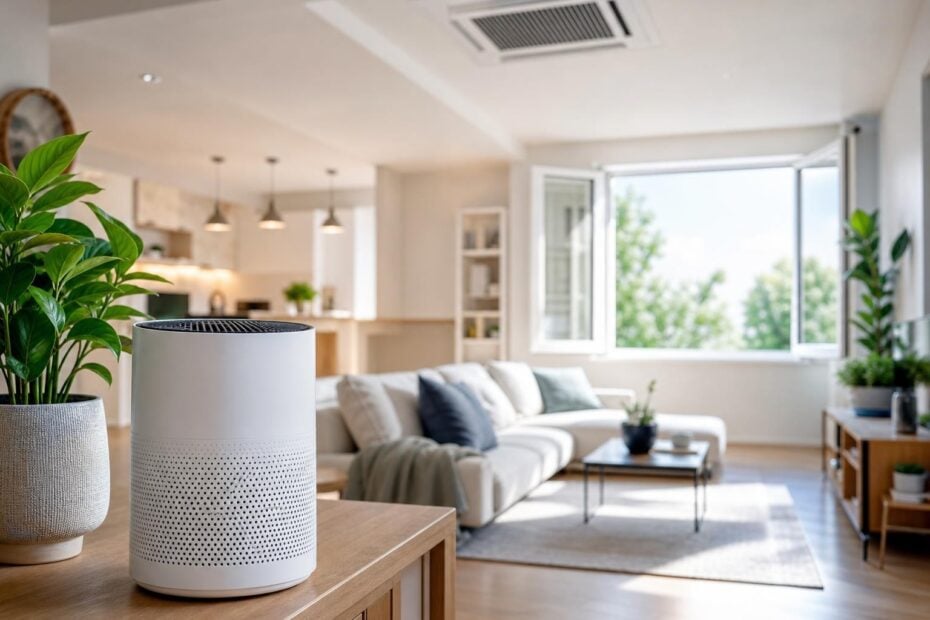
Cutting off a pollutant at its origin is generally far more effective than trying to filter it out after it’s already in the air. Source control should be the starting point for any indoor air quality plan. Practical steps include avoiding smoking indoors, opting for less-polluting cleaning products when possible, ventilating thoroughly during painting or repair work, and keeping solvents or fuels stored away from living spaces. Combustion appliances should also be maintained according to the manufacturer’s guidance. Improving indoor air quality is rarely about finding one magic fix. A device such as an air purifier can help capture some airborne particles, but it works best as part of a larger strategy—one that also tackles pollution at the source and keeps ventilation adequate.
Take a common example: cooking without a range hood that vents outdoors can send indoor particle levels soaring. In a case like this, changing cooking habits and improving exhaust will likely do more good than relying on filtration alone. It’s also worth keeping in mind that “natural” or fragranced products aren’t automatically safer—checking labels, following instructions, and considering personal sensitivities matters far more than marketing claims.
Improve Ventilation Safely
Ventilation works by diluting and clearing out indoor pollutants through an exchange with outdoor air. Practical steps include running kitchen and bathroom exhaust fans during and after cooking or showering, and opening windows whenever outdoor air quality, temperature, and security allow it. It’s worth drawing a clear line between safe ventilationand simply running a standard fan, which only moves indoor air around rather than removing pollutants from it.
Many forced-air heating and cooling systems recirculate indoor air instead of pulling in fresh air from outside, so it’s worth checking whether your exhaust fans genuinely vent outdoors rather than just dumping air into an attic or wall cavity. And there are times—during wildfire smoke, high outdoor pollution, or extreme weather—when opening windows isn’t the best idea.
Control Moisture and Prevent Mold
Indoor moisture commonly comes from plumbing leaks, condensation, roof or foundation problems, poor bathroom ventilation, and damp basements. Fixing leaks quickly and drying out wet materials without delay goes a long way toward preventing mold. Running exhaust fans during and after showers or cooking also helps keep humidity in check.
Moisture check: Watch for condensation on windows, peeling paint, musty odors, visible staining, or dampness that keeps returning to the same spot. These are early warning signs worth investigating before they turn into bigger problems.
Scrubbing away visible mold without fixing the underlying moisture source usually means the problem just comes back. A musty basement or bedroom, for example, calls for a closer look at humidity levels, drainage, and ventilation before you settle on a cleaning method. Extensive growth, recurring water intrusion, or health concerns may call for a professional evaluation.
Use Filtration as a Supporting Measure
Portable air filtration units and higher-efficiency HVAC filters can supplement—but never replace—source control and ventilation. It helps to understand the difference between particle filtration, which captures dust and allergens, and gas-phase filtration, which targets certain chemical compounds; not every filter handles both jobs. Whole-home HVAC filtration and portable room units also differ quite a bit in coverage area and maintenance needs.
When weighing filtration options, things like room size, airflow, filter replacement schedules, and operating noise all deserve consideration. How well a filter performs depends heavily on correct sizing, placement, and consistent upkeep. No filtration device, no matter how advanced, can resolve mold caused by ongoing water intrusion, eliminate every pollutant, or stand in for carbon monoxide alarms and routine appliance servicing.
Maintain a Healthier Indoor Environment
Ongoing maintenance is what sustains good air quality over the long haul: replacing HVAC filters on schedule, cleaning range hoods and ventilation grilles, checking leak-prone areas, and servicing combustion appliances regularly. Everyday habits matter too—cutting back on strong fragrances, ventilating during renovations, keeping pet areas tidy, and using doormats to cut down on tracked-in dust all add up over time. People managing asthma, allergies, or other respiratory conditions may want to seek individualized guidance from a healthcare professional.
A Practical Priority Checklist
- Identify the likely pollutant or source.
- Remove, reduce, or repair the source.
- Improve exhaust or outdoor-air ventilation when conditions allow.
- Address leaks, dampness, and condensation.
- Add appropriate filtration if airborne particles remain a concern.
- Maintain equipment and reassess whether conditions improve.
Key takeaway: Source control and moisture management should come first; ventilation and filtration work best as supporting measures, not standalone solutions.
Creating a Sustainable Indoor-Air Routine
Improving indoor air quality works best as a layered approach: identify the pollutants, tackle them at the source, ventilate safely, manage moisture, and bring in filtration only where it genuinely adds value. Rather than chasing a single solution, start with the most obvious or likely source in your own home and make one measurable improvement at a time. A healthier indoor environment tends to come from consistent maintenance and informed choices—not from any single product doing all the work on its own.